

The Brookbush Institute Publishes a NEW Glossary Term: 'Regional Interdependence'
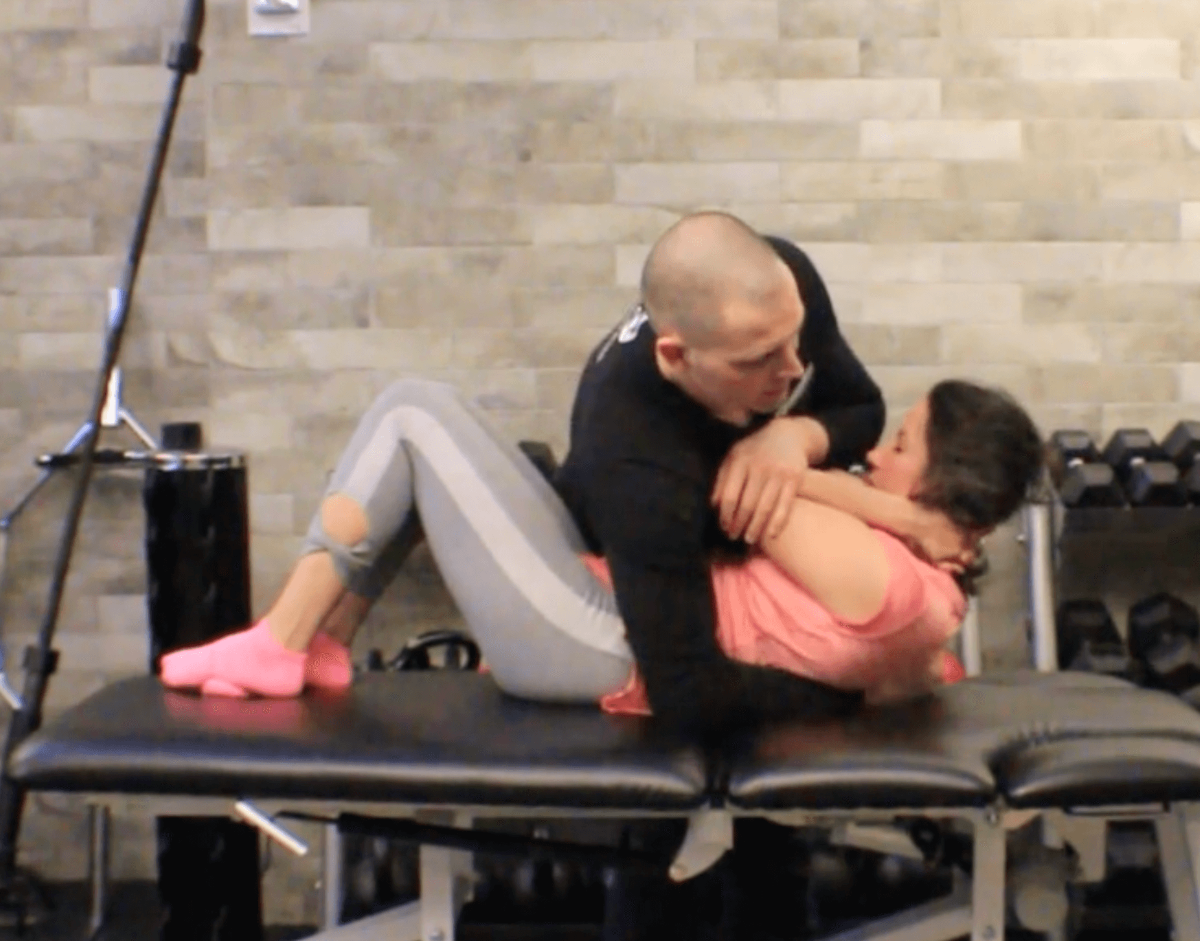
Regional Interdependence - https://brookbushinstitute.com/glossary/regional-interdependence
The Brookbush Institute continues to enhance education with new articles, new courses, a modern glossary, an AI Tutor, and a client program generator.
- Related Article: Is There a Single Best Approach to Physical Rehabilitation?
- New Glossary Term: Levels of Evidence are Flawed
DEFINITION
Regional Interdependence is the concept that a patient’s primary musculoskeletal symptoms may be directly or indirectly influenced by impairments in other body regions or systems. The clinical implication is that interventions targeted to one region of the body can alter symptoms, function, or performance in other body segments.
The term “regional interdependence” was first formalized by Wainner et al. (1) as a musculoskeletal examination model, and later expanded by Sueki, Cleland, and Wainner (2) into a broader neuromusculoskeletal and biopsychosocial framework.
Citations
- Wainner, R. S., Whitman, J. M., Cleland, J. A., & Flynn, T. W. (2007). Regional interdependence: a musculoskeletal examination model whose time has come. Journal of orthopaedic & sports physical therapy, 37(11), 658-660.
- Sueki, D. G., Cleland, J. A., & Wainner, R. S. (2013). A regional interdependence model of musculoskeletal dysfunction: research, mechanisms, and clinical implications. Journal of manual & manipulative therapy, 21(2), 90-102.
SEMANTIC CLARIFICATIONS:
Local versus Interdependent Models
- Local: In older conventional models, intervention selection is based on patient symptoms, and treatment is generally focused on the joint or structure exhibiting symptoms. For example, shoulder pain is treated with shoulder-specific interventions.
- Interdependent: Models that account for regional interdependence consider impairments in local, neighboring, and sometimes distal regions that may contribute to the patient’s primary complaint. For example, shoulder pain results in evaluation of at least the scapula, thoracic spine, and cervical spine, and may include the trunk and pelvis.
Regional Interdependence vs. Referred or Radicular Pain
- Referred pain and radicular pain are symptom patterns with predictable patterns. For example, an active trigger point will produce a pattern of pain that is referred outward from an active site when pressed on. Further, radicular pain is pain along a nerve, generally resulting from irritation to the nerve or nerve root.
- Regional interdependence describes how impairments or symptoms in one region (for example, loss of thoracic extension, weak hip abductors, limited ankle dorsiflexion) may alter load distribution, motor control, or pain processing in other regions. For example, a lack of ankle dorsiflexion can alter lower extremity, pelvic, and trunk motion, resulting in lower back pain.
Regional Interdependence vs. Kinetic Chain
- Kinetic Chain: A concept that has expanded over the past several decades to describe the integration of 4 body systems (muscle, joints, fascia, and nerves), as well as the coordinated function of various body segments (e.g., hip, knee, and ankle) to produce motion. Kinetic refers to motion, and chain is an analogy for the interdependent link between systems.
- Regional Interdependence and the kinetic chain are likely referring to similar concepts; however, Regional Interdependence considers the effects of interdependent segments on pain and dysfunction.
APPLIED EXAMPLES:
- Thoracic spine and shoulder pain: A patient with subacromial pain during overhead motion presents with limited thoracic extension and rotation, scapular dyskinesis, and normal local shoulder strength testing. Interventions include thoracic mobilization or manipulation, thoracic extension exercises, and scapular control drills. Improvement in overhead ROM and pain without direct shoulder joint mobilization illustrates regional interdependence between the thoracic spine, scapula, and shoulder.
- Hip abductors and knee valgus / patellofemoral pain: A runner reports anterior knee pain and exhibits knee valgus during single-leg squat, with weak hip abductors and poor trunk control. A program focused on hip abductor and external rotator strengthening, trunk stability, and gait retraining results in reduced knee valgus and knee symptoms. Here, proximal hip and trunk impairments influence distal knee mechanics and symptoms.
- Ankle dorsiflexion and squat depth / medial knee collapse: During an overhead squat, a client demonstrates limited depth, heel rise, and medial knee collapse on one side. Assessment reveals restricted ankle dorsiflexion and tight gastroc–soleus complex. After ankle joint mobilizations, soft-tissue techniques, and dorsiflexion-biased strengthening, squat depth and frontal-plane knee alignment improve. This represents interdependence between ankle mobility and knee–hip mechanics.
FREQUENTLY ASKED QUESTIONS (FAQs)...
Brent Brookbush
Brookbush Institute
+ +1 2012069665 ext.
email us here
Visit us on social media:
LinkedIn
Instagram
Facebook
YouTube
TikTok
X
Other
Legal Disclaimer:
EIN Presswire provides this news content "as is" without warranty of any kind. We do not accept any responsibility or liability for the accuracy, content, images, videos, licenses, completeness, legality, or reliability of the information contained in this article. If you have any complaints or copyright issues related to this article, kindly contact the author above.
